 For immediate release Tuesday 21st July 2026A new European study has found that while agroecological networks are making meaningful progress towards more sustainable food systems, they are being held back by structural barriers beyond their control. The research suggests that the pressure on sustainability projects to deliver fast, measurable results may be limiting their ability to achieve the deeper, long-term transformation they are designed to support. The paper, published in “Sustainability Science” in July, was carried out by researchers from Agroecology-TRANSECT, which brings together farmers, scientists, advisers and civil society organisations across 11 agroecological “Innovation Hubs” in Europe. For immediate release Tuesday 21st July 2026A new European study has found that while agroecological networks are making meaningful progress towards more sustainable food systems, they are being held back by structural barriers beyond their control. The research suggests that the pressure on sustainability projects to deliver fast, measurable results may be limiting their ability to achieve the deeper, long-term transformation they are designed to support. The paper, published in “Sustainability Science” in July, was carried out by researchers from Agroecology-TRANSECT, which brings together farmers, scientists, advisers and civil society organisations across 11 agroecological “Innovation Hubs” in Europe. 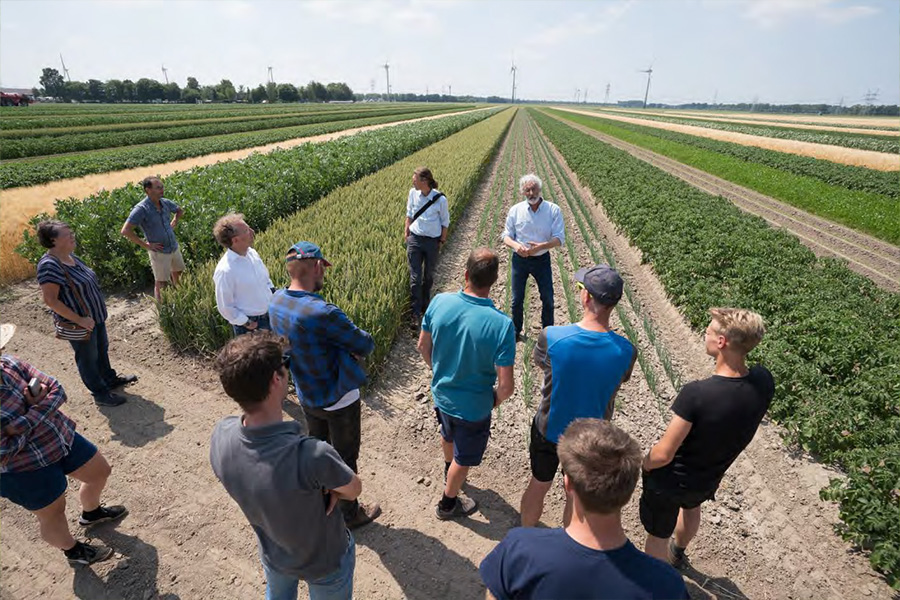 The study found that collaborative projects are successfully helping farmers and local networks develop new understandings and strategies, and supporting Innovation Hubs in their work to expand agroecological farming practices and influence agricultural policy. For example, in the Netherlands, project-backed policy work helped increase participation in strip-cropping schemes from around 50 to 400 farmers in just one year. However, the researchers say these successes, while promising, still largely failed to address root causes of societal challenges like biodiversity loss and climate change. Lead author, Stephen Leitheiser of Wageningen University, said: “Research projects are increasingly expected to drive transformative changes with people working on the ground. But too often, the focus is all geared towards changes that people can make within current systems. We see that possibilities for doing things differently are often quite limited by things beyond the control of researchers and farmers. To address the kinds of changes that are needed, we need to engage in the slower, more difficult work of asking why we are facing these crises in the first place, and how we can work together with society more broadly to change things at a more structural level.” The paper identifies three major barriers blocking deeper transformation:(1) farmers’ dependence on global commodity markets and misaligned policy frameworks, (2) a culture of fast-paced, short-term, metric-driven work across farming and research sectors, and (3) political and economic systems that tend to support sustainability only up to the point where it does not threaten established economic interests. It was not the case that networks of farmers and researchers deliberately avoided addressing root causes. In fact, one of the main outcomes was the development of clearer and more critical understanding of these deeper problems. But these researchers and practitioners were still limited in translating this learning into action, because the structural conditions they were working within limited their room for manoeuvre. Drawing on previous research (Ref 1), the authors call this a ‘glass ceiling’ on agroecological transition. While conceptual changes and learning were more transformative, changes on the ground were mostly limited to technical fixes that could be incorporated into existing systems. This left out the more fundamentally transformative principles of agroecology. For example, in one case, researchers in Guadeloupe reported that government officials softened agroecological language in regional planning discussions to avoid conflict with powerful agricultural lobbies. The paper also highlights mounting pressure on researchers themselves. Scientists involved in the project described struggling with short-term funding cycles, growing workloads and institutional systems that reward rapid outputs over long-term, engaged that can generate transformative societal effects. Despite these constraints, the study says agroecological networks across Europe are building real capacity, including sharper awareness of the barriers they face, improving cooperation between farmers and researchers, and opening up new policy conversations around sustainable food systems.Work carried out for the paper also informed policy recommendations to the European Union in the policy brief “Producing actionable knowledge for transformative change: impacts, potentials, and challenges in transdisciplinary research”. These recommendations include: Longer-term, more flexible funding that allows researchers, farmers and civil society groups to work together over time and respond to real-world challenges as they emerge. Greater support for transformative innovation, including social, political and governance change while properly valuing the role of community organisations and farmers in research projects. Stronger links between science and policy, with clearer pathways for research findings to shape agricultural, trade, food and climate policy, and a bigger role for researchers and civil society in public decision-making.ENDSNotes to editor: References 1. Ref 1: Daniel Hausknost (2020) The environmental state and the glass ceiling of transformation, Environmental Politics, 29:1, 17-37, DOI: 10.1080/09644016.2019.1680062.Hammond, M. (2025). State and culture in sustainability transformations: structural power, democracy, and the promise of a Marcusian cultural politics of critical meaning-making. Sustainability: Science, Practice and Policy, 21(1), 2450850. The study found that collaborative projects are successfully helping farmers and local networks develop new understandings and strategies, and supporting Innovation Hubs in their work to expand agroecological farming practices and influence agricultural policy. For example, in the Netherlands, project-backed policy work helped increase participation in strip-cropping schemes from around 50 to 400 farmers in just one year. However, the researchers say these successes, while promising, still largely failed to address root causes of societal challenges like biodiversity loss and climate change. Lead author, Stephen Leitheiser of Wageningen University, said: “Research projects are increasingly expected to drive transformative changes with people working on the ground. But too often, the focus is all geared towards changes that people can make within current systems. We see that possibilities for doing things differently are often quite limited by things beyond the control of researchers and farmers. To address the kinds of changes that are needed, we need to engage in the slower, more difficult work of asking why we are facing these crises in the first place, and how we can work together with society more broadly to change things at a more structural level.” The paper identifies three major barriers blocking deeper transformation:(1) farmers’ dependence on global commodity markets and misaligned policy frameworks, (2) a culture of fast-paced, short-term, metric-driven work across farming and research sectors, and (3) political and economic systems that tend to support sustainability only up to the point where it does not threaten established economic interests. It was not the case that networks of farmers and researchers deliberately avoided addressing root causes. In fact, one of the main outcomes was the development of clearer and more critical understanding of these deeper problems. But these researchers and practitioners were still limited in translating this learning into action, because the structural conditions they were working within limited their room for manoeuvre. Drawing on previous research (Ref 1), the authors call this a ‘glass ceiling’ on agroecological transition. While conceptual changes and learning were more transformative, changes on the ground were mostly limited to technical fixes that could be incorporated into existing systems. This left out the more fundamentally transformative principles of agroecology. For example, in one case, researchers in Guadeloupe reported that government officials softened agroecological language in regional planning discussions to avoid conflict with powerful agricultural lobbies. The paper also highlights mounting pressure on researchers themselves. Scientists involved in the project described struggling with short-term funding cycles, growing workloads and institutional systems that reward rapid outputs over long-term, engaged that can generate transformative societal effects. Despite these constraints, the study says agroecological networks across Europe are building real capacity, including sharper awareness of the barriers they face, improving cooperation between farmers and researchers, and opening up new policy conversations around sustainable food systems.Work carried out for the paper also informed policy recommendations to the European Union in the policy brief “Producing actionable knowledge for transformative change: impacts, potentials, and challenges in transdisciplinary research”. These recommendations include: Longer-term, more flexible funding that allows researchers, farmers and civil society groups to work together over time and respond to real-world challenges as they emerge. Greater support for transformative innovation, including social, political and governance change while properly valuing the role of community organisations and farmers in research projects. Stronger links between science and policy, with clearer pathways for research findings to shape agricultural, trade, food and climate policy, and a bigger role for researchers and civil society in public decision-making.ENDSNotes to editor: References 1. Ref 1: Daniel Hausknost (2020) The environmental state and the glass ceiling of transformation, Environmental Politics, 29:1, 17-37, DOI: 10.1080/09644016.2019.1680062.Hammond, M. (2025). State and culture in sustainability transformations: structural power, democracy, and the promise of a Marcusian cultural politics of critical meaning-making. Sustainability: Science, Practice and Policy, 21(1), 2450850.
2. “Actionable knowledge for agroecological transformation: a critical realist analysis of co-innovation in a transdisciplinary project” was published in Sustainability Science on 7th July 2026: Actionable knowledge for agroecological transformation: a critical realist analysis of co-innovation in a transdisciplinary project | Sustainability Science | Springer Nature Link. 3. More to learn on the transition in Spanish and Danish Innovation Hubs in:Martínez Ramón et al., 2026. Countering chestnut farming abandonment in the Sierra de Aracena (Spain): Options of an agroecological transformation of the value chain. Agroecol. Sustain. Food Syst. https://doi.org/10.1080/21683565.2026.2680602.Cassart et al., 2025. A heuristic framework to portray agroecological transition initiatives in reflexive arrangements, illustrated with a conservation agriculture network in Denmark. Ecol. Soc. 30(2), 10. https://ecologyandsociety.org/vol30/iss2/art10 Image creditStripcropping network at Wageningen University & Research’s Farm Future experimental site in Lelystad, the Netherlands. By Dick Boschloo. About Agroecology-TransectAgroecology-TRANSECT is a €6.4 million Horizon Europe project running from 2022–2026, involving partners and farming networks across Europe working on agroecological transition and sustainable food systems. Find out more about Agroecology-TRANSECT at https://www.agroecology-transect.net/. For media queries or interview requests, please contact Tim Dickens, Agroecology-TRANSECT Comms Lead, Soil Association tdickens@soilassociation.org; or press@soilassociation.org Agroecology-Transect is a multi-partner network which has secured EUR 6.4m Horizon Europe funding to realise the full potential of agroecology for European agriculture by improving the knowledge base for farmers and farm advisors supporting policy decision makers to deliver its widescale adoption. It involves 19 research partners, led by the French National Institute for Agriculture, Food, and Farming – INRAE, working across 11 ‘Innovation Hubs’ in three distinct clusters: Diversification for Resilience; Sustainable Weeding Management; and Certification and Branding Values. Each hub takes a multi-agency approach to explore different agroecology practices in real-life contexts, such as the impact of farming with a diverse range of crops or livestock. They are collecting evidence, analysing data, producing insights and identifying opportunities and barriers for enhancing the role of agroecology. For all inquiries, please contact us at: press@soilassociation.org Soil Association, Spear House, 51 Victoria Street, Bristol, United Kingdom, BS1 6AD |
 italianewspost.com